speed
Understanding Power Zones
Everyone has seen the pretty images of power zones; you may have even created one as they are based on simple percentages.
A “zone” simply means a band of power corresponding to a certain intensity. It is simply a shorthand for converting the continuous power-duration curve into several categories.
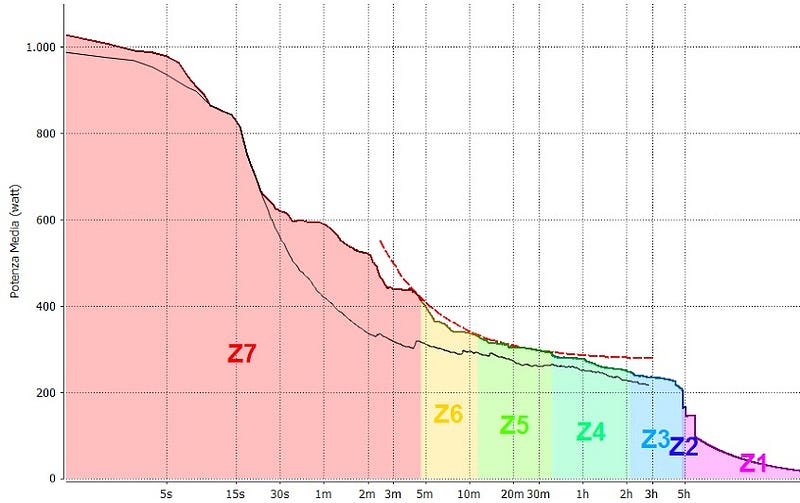
Zones are arbitrary in the sense that your body does not have any special affiliation with 55% or 75% or 90% of FTP. So whilst any zone does not correspond to any physiological variable, it can be useful in training to aim for a certain power band (e.g., tempo) when training.
timer
Introducing Time-to-Exhaustion (TTE)
However, there is something missing from zones, which is built into the power curve… time. Let’s say your coach says, “ride in zone 5 (VO2max) for as long as possible.” How long is that? This would be the point on the power curve where typical zone 5 (let’s say the middle of it, but it could be the bottom figure or the top!) can no longer be maintained. This is known as time-to-exhaustion (in z5).
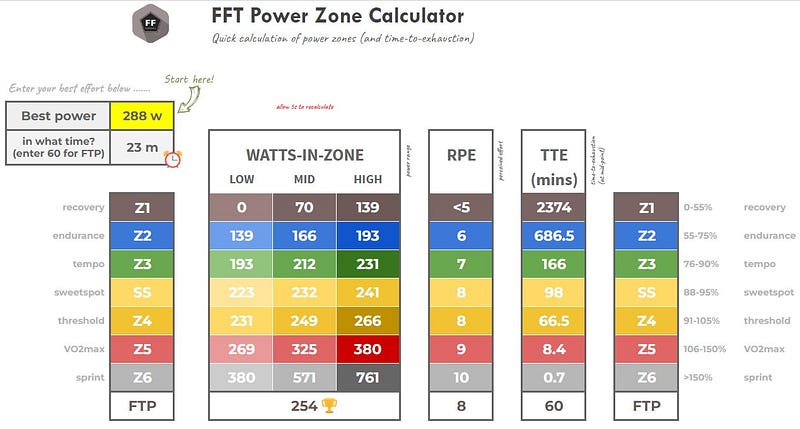
I wanted to create this for a while, and fortunately, time-to-exhaustion (TTE) can be reverse calculated from the power-duration curve. So in this new take on the classic power zone model, we present each zone, linked with TTE.
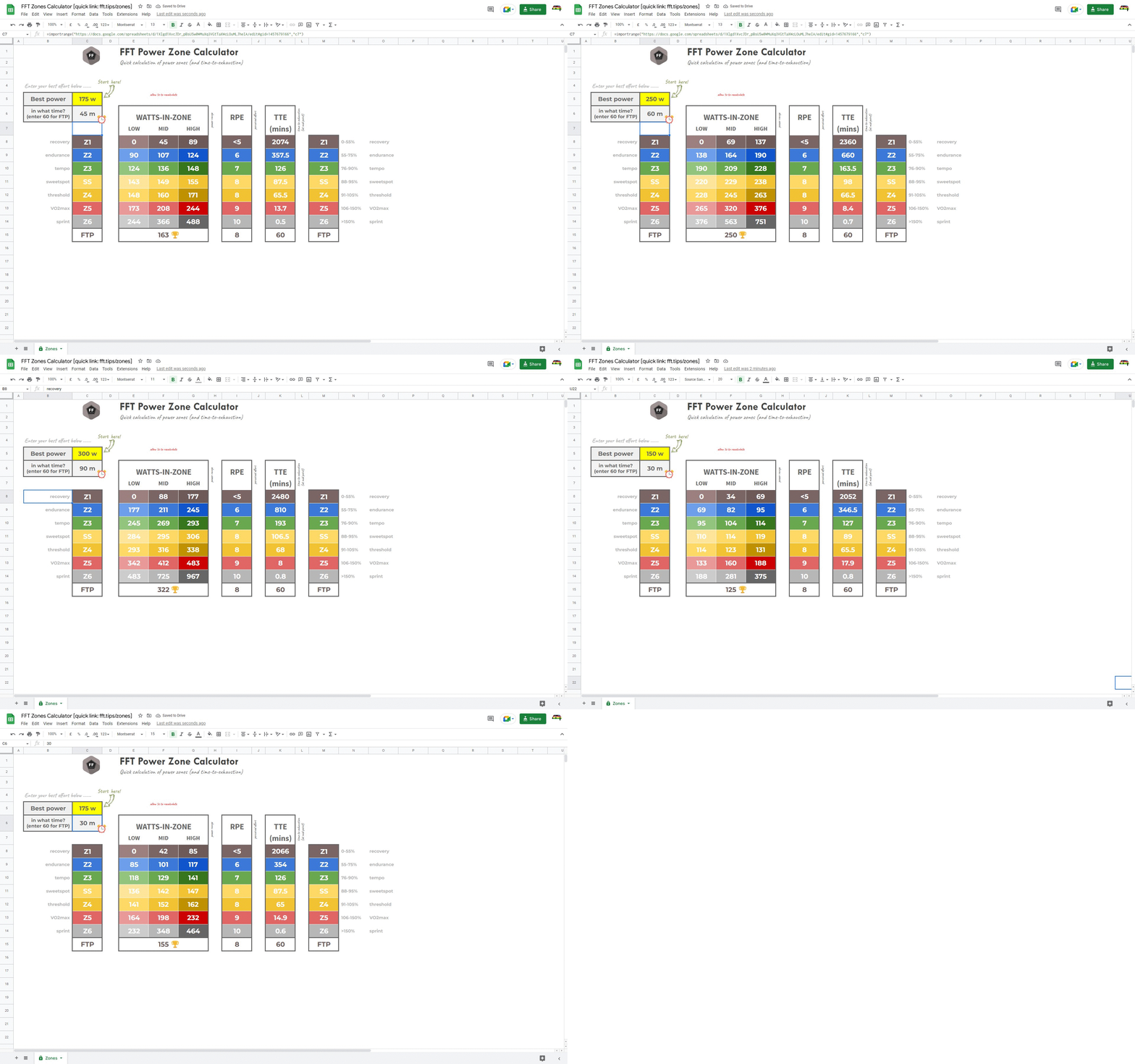
In addition, one more little trick: you don’t need to know your FTP, you can enter any best effort. Try it here: linkfft.tips/zones
format_align_justify
Aligning Training Zones
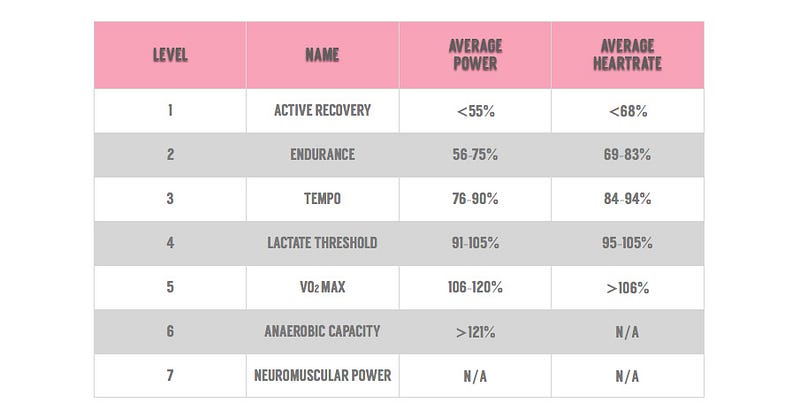
One question: can all the zones be lined up like running pace / swimming pace / lactate threshold? Actually, I found a nice chart from coachcox.co.uk, so I’ll present that here for now:
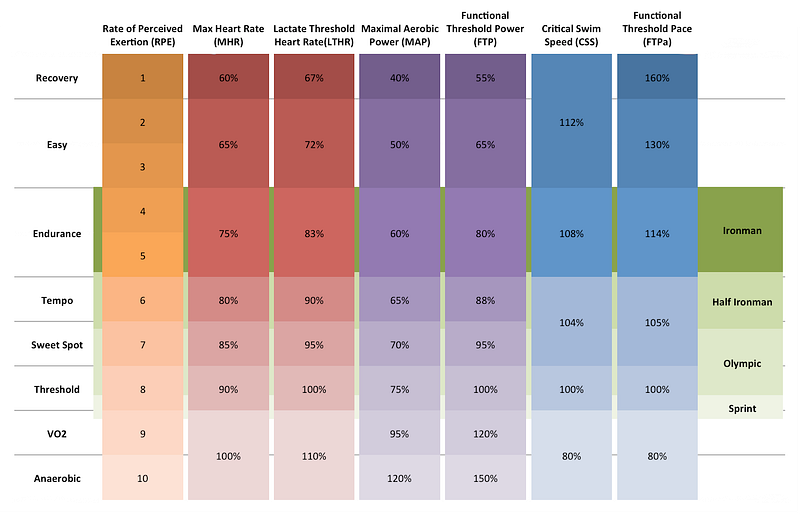
I hope this helps! Please pass on the link or access the calculator directly using the resources below: